Main Types of Outdoor Sports Netting
PE Coated Outdoor Sports Netting
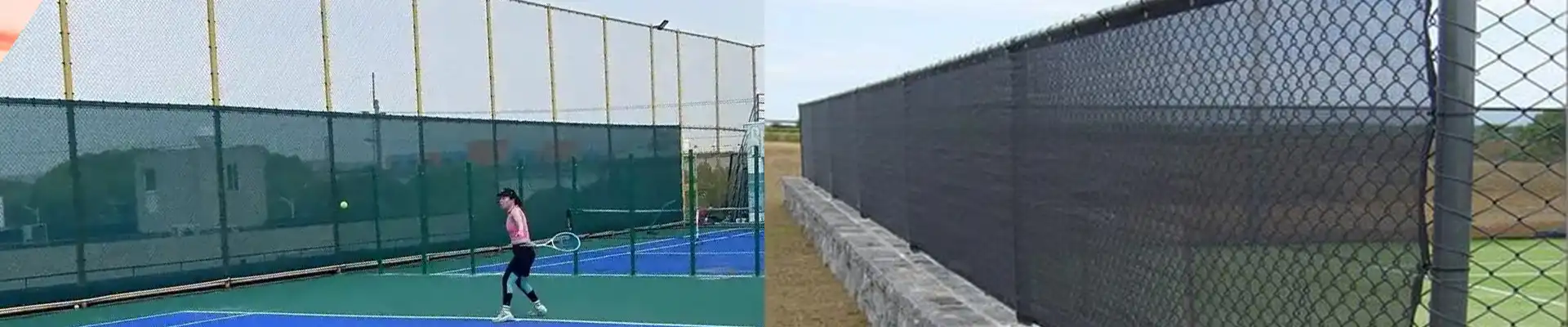
PE coated netting is the most widely used option with balanced performance. It consists of a galvanized steel wire core coated with high-density polyethylene. Its advantages include excellent weather resistance, UV resistance, and long service life of 8 to 12 years. It provides a safe cushioning effect because the smooth and elastic surface reduces the risk of injury from player impact. It is also highly corrosion resistant, with very low surface water absorption, effectively preventing the inner steel wire from rusting. This type is suitable for most outdoor courts such as football, basketball, and tennis, offering the best overall value.
PVC Coated Outdoor Sports Netting
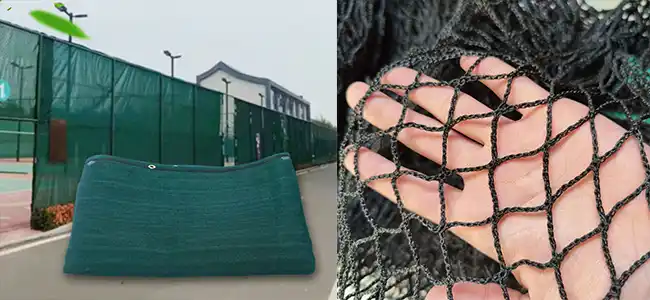
PVC coated netting is an alternative with bright colors and good flexibility. Like PE fencing, it has a steel core coated with polyvinyl chloride. It offers a variety of color options for personalized court design, and its softer texture makes it suitable for places where higher elasticity is required, such as school playgrounds. However, its weather resistance is slightly inferior to PE, and its outdoor service life is generally shorter. It is commonly used in school fields and community courts where aesthetics are a priority.
PP Woven Outdoor Sports Netting
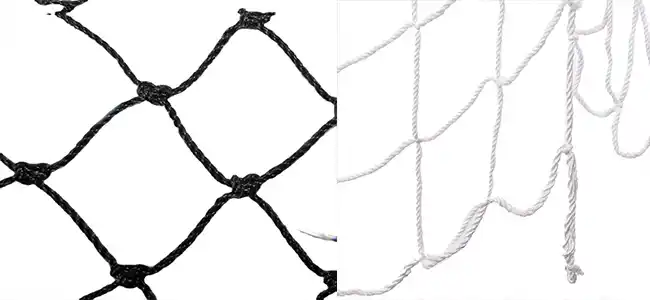
PP woven fencing is a lightweight option made entirely of polypropylene fibers woven through a special process. It is extremely light, making transportation, installation, and removal very convenient. It provides good visibility while effectively blocking balls of various sizes, and it is almost maintenance-free once installed. This type is suitable for non‑intense training fields, multi‑purpose sports areas, or temporary fencing needs.
Nylon Woven Outdoor Sports Netting
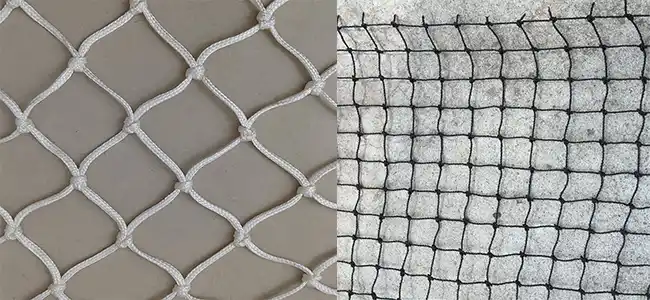
Nylon woven netting is a high‑end choice for high strength and high elasticity. Made from high‑strength nylon fibers, sometimes blended with polyester for added durability, it offers extreme tensile strength and abrasion resistance, withstanding repeated impacts. The fine mesh provides protection while minimizing visual obstruction for spectators. It is mainly used as impact screens for high‑intensity sports like basketball and football, or in professional courts with high usage standards.
Advantages Compared to Metal Netting
Outdoor Sports netting offers significant advantages over traditional metal fencing, which explains its popularity.
Safety is greatly enhanced: the plastic coating creates a smooth and soft surface, preventing cuts from direct contact with metal. The elastic nature of materials like PE also cushions impacts, significantly reducing the risk of injury.
Durability in outdoor conditions is superior: with added UV inhibitors, the plastic layer resists aging from sunlight. The surface absorbs almost no water and resists acid and alkali corrosion, making it excellent in humid or rainy regions. This leads to a lifespan far exceeding that of ordinary metal fencing, often three to five times longer.
Cost effectiveness: while the initial investment may be higher than ordinary wire mesh, the long service life and nearly zero maintenance costs (no need for regular painting to prevent rust) result in a lower total cost of ownership. Additionally, PE and PVC coated nets are available in many colors that do not fade easily, keeping the court looking professional and clean for years.
Selection and Maintenance Tips
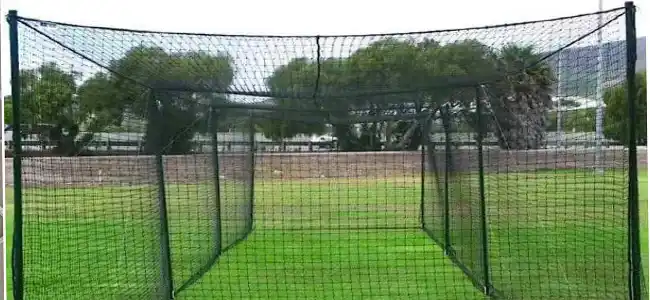
When selecting Outdoor Sports Netting, consider the application. For general outdoor courts like football or basketball, PE coated fencing is the first choice. Pay attention to the inner wire diameter at least 3.5 mm, the outer diameter after coating at least 4.0 mm, and the standard mesh size of 50 mm by 50 mm. For coastal or highly corrosive areas, choose reinforced PE coated fencing with thicker coating or a highly galvanized inner wire of at least 300 g/m². For children’s play areas, soft polyester or nylon mesh fencing is strongly recommended to avoid any risk of cuts from metal parts. For temporary or flexible needs, PP woven fencing offers mobility and low maintenance. For high‑end or professional training venues, nylon woven fencing provides the highest strength and wear resistance.
Also examine the manufacturing details. High‑quality products will specify the use of pure high‑density PE or PVC raw materials, not recycled or filled materials that may shorten lifespan. Premium fencing is made using a high‑temperature plasticizing process at 300°C to ensure the plastic layer bonds tightly to the steel core, preventing rust‑induced cracking from within.
The frame quality is equally important. The posts and crossbars should have a wall thickness of at least 2.5 mm. For surface treatment, spray coating or dip coating is recommended for better corrosion protection than ordinary paint.
Installation involves three main steps: foundation work for embedding flanges, frame assembly ensuring vertical posts, and attaching the mesh while allowing some elasticity.
For maintenance, clean the fencing regularly with clean water. Never use chemical solvents, as they may corrode the plastic layer. Check screw tightness every quarter, and promptly tighten or replace damaged parts. If a small area is damaged, it can be repaired locally using plastic of the same color. For large damaged areas, replace the entire panel.
Contact: +8615075482313
WhatsApp: +8615075482313
Email: yingruichina@gmail.com
Add: 100 meters west of Xiliangwa Village, Anping County, Hebei, China
We chat