Introduction to Polyethylene green privacy screens
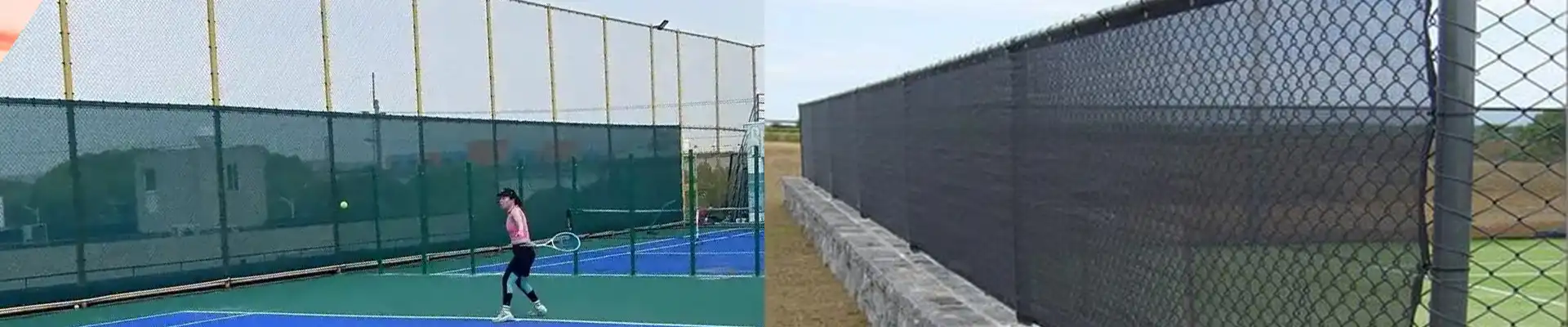
Polyethylene green privacy screen is a mesh product made primarily from high density polyethylene (HDPE). It is specifically designed to provide visual screening and block outside views in outdoor environments, and it is now widely used in gardens, patios, construction sites, and many other settings.
Core Material and Construction
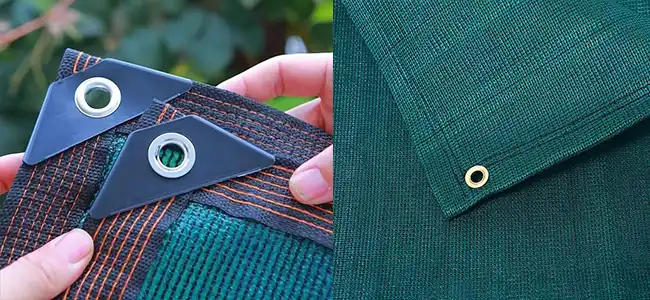
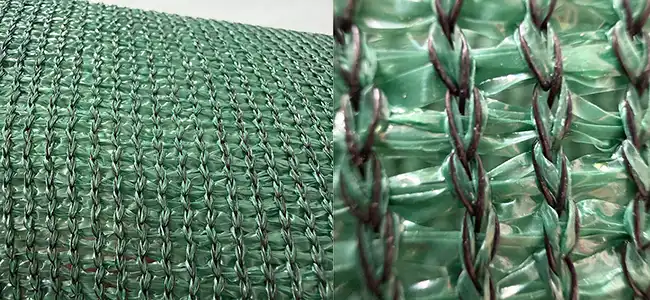
The main material is high density polyethylene, which is durable, impact resistant, scratch resistant, and also resistant to mould and rot. Unlike ordinary fabrics, it does not easily decay or become brittle. Most products are treated with UV stabilisers during production, which effectively prevents degradation and fading from prolonged sun exposure and greatly extends the service life. The net is usually made using a Raschel knitting process, which gives a tight and stable structure. This means that even if the net is cut, it will not easily unravel. For easy fixing, the edges are generally reinforced, and metal or aluminium grommets are installed at regular intervals. During installation, cable ties, ropes, or hooks can be passed through these grommets to secure the net firmly to fences, posts, or other supports.
Key Features and Functions
The primary function is effective visual screening. The high density weave blocks most sightlines, with shading rates typically ranging from 70 % to 95 %. Some products claim to provide up to 90 % visibility blockage, creating a private space for users. Despite its screening ability, the mesh structure allows air to circulate freely, so it does not feel stuffy even in hot weather, making it especially suitable for outdoor areas where ventilation is important. In addition to green privacy, the net offers several secondary benefits. It provides shade and reduces heat by filtering strong sunlight. The dense surface can also weaken wind, acting as a windbreak. On construction sites and similar locations, it helps block dust and debris and provides some noise reduction. The material is lightweight and flexible, so users can easily cut it to the required size with ordinary scissors.
Application Scenarios
These nets are used in a wide variety of settings. In homes and gardens, they are commonly installed around patios, balconies, swimming pools, and yards to shield against neighbours or passers by and to create a cosy private outdoor area. On building and engineering sites, they serve as screening fences to control dust dispersion, prevent unauthorised access, and improve the appearance of the work area. For commercial and public events, they can be used for temporary event barriers, crowd control, or as perimeter fencing around sports fields. In agriculture and horticulture, they provide shade protection for plants or can be used as animal barriers.
Common Specifications and Purchasing Tips
The weight of the net, expressed in grams per square metre, typically ranges from 75 g/m² to 350 g/m². A higher weight usually means a thicker, more durable net with better screening performance. Common widths include 1 metre, 1.5 metres, and 1.8 metres, while lengths are often available in 5 metre, 25 metre, and 50 metre rolls, and our manufacturers also offer custom sizes. Colours are varied, with popular choices being green, black, grey, and beige, so you can select one that matches your personal preference or the surrounding environment. Shading rates vary from 30 % to 95 %. If green privacy is a high priority, it is advisable to choose a product with a shading rate of at least 85 %.
In summary, a polyethylene green privacy screen combines multiple functions – green privacy screening, sun shading, wind protection, and dust control – into one practical product. Thanks to its durability, light weight, and easy installation, it is an excellent choice for enhancing the green privacy and comfort of outdoor spaces.
Contact: +8615075482313
WhatsApp: +8615075482313
Email: yingruichina@gmail.com
Add: 100 meters west of Xiliangwa Village, Anping County, Hebei, China
We chat